7 Critical Things About Delivery Truck Accidents
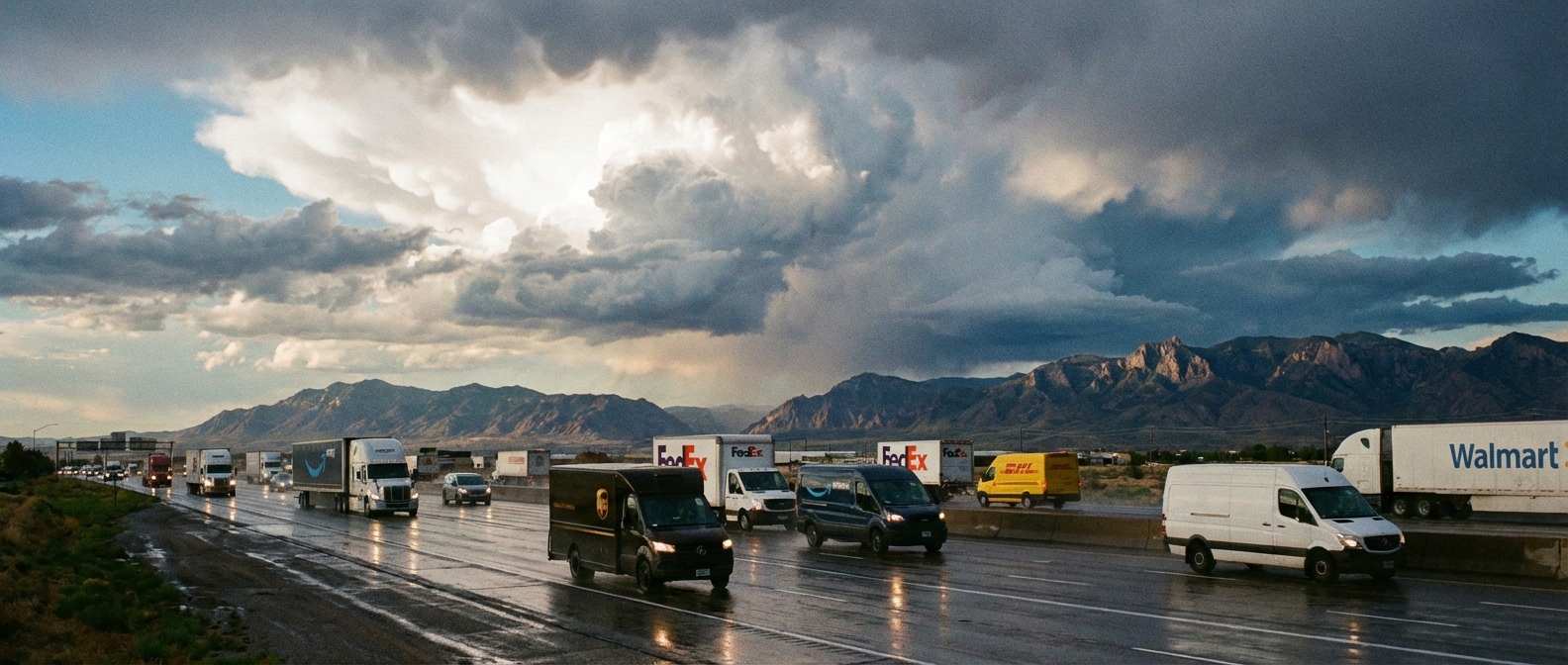
When a delivery truck hits you, the legal reality is more complicated than it first appears. The driver might work for Amazon as a Delivery Service Partner (DSP) contractor, not Amazon directly. UPS drivers are unionized Teamsters. FedEx Ground drivers are independent contractors. USPS drivers are federal employees governed by different rules entirely. This matters enormously—it determines who you can sue, what evidence matters, and how much you might recover. Route pressure, driver quotas, and delivery speed requirements are often central to the case. Understanding these distinctions and collecting the right evidence immediately after the crash gives you the strongest position in a claim.
Talk to an attorney who handles Amazon, UPS, and FedEx accidents.
Start my review →Understand the Three-Defendant Problem
Most delivery truck crashes have multiple potential defendants. The driver is obvious, but you may also sue the delivery company (DSP, UPS, FedEx, USPS) and the parent brand (Amazon, in many cases). When the vehicle is Amazon-branded but the driver works for a DSP, both can sometimes be liable. This is called "vicarious liability" — the parent company is responsible for the contractor's negligence under certain conditions. In other cases, Amazon itself can be liable for route pressure or negligent supervision. UPS is a direct employer (Teamster union protects the driver), so liability flows from UPS directly. USPS requires a different process entirely because federal employees are protected by sovereign immunity. Understanding who the actual employer is at the moment of the crash changes your entire case strategy.
DSP Contractors Are Not Amazon Employees
An Amazon-branded van or box truck is almost never driven by an Amazon employee. Instead, it's operated by a Delivery Service Partner—a contractor who leases vehicles, hires drivers, and runs routes on Amazon's specifications. This distinction matters in court. DSP drivers often face intense pressure: they must complete routes in 8-10 hours despite high stop density, maintain delivery rates that Amazon's Rabbit app enforces, and hit metrics that the DSP owner needs to maintain their contract. A crash lawyer looks for evidence of this pressure—screenshots of performance metrics, time-per-stop requirements, deactivation threats. If Amazon's routing software sent the driver on an unsafe route or if the DSP owner ignored speeding or reckless behavior, liability extends upstream. You can sue the DSP for negligent hiring or supervision, and sometimes Amazon itself for controlling the work conditions.
UPS Drivers Are Teamsters
UPS operates differently. Drivers are unionized employees, not contractors. This means UPS is the direct employer and liable for the driver's negligence. It also means the driver has union representation and documented safety training. When you have a UPS accident, you're suing UPS, not a middleman contractor. The upside: UPS is a large, insured company. The downside: they have extensive safety protocols and driver training documentation, so you'll need to show either recklessness or negligent supervision. Route pressure still matters in UPS cases, but it looks different. You'd be looking for evidence that UPS knowingly sent the driver on an unreasonably tight route, ignored fatigue, or deprioritized safety for speed.
FedEx Ground Drivers Are Independent Contractors
FedEx Ground operates through independent contractors (not employees, not DSPs in the Amazon sense). Drivers own or lease their vehicles and operate as small business owners. This creates a different liability picture. FedEx Ground has less direct control over driver behavior than Amazon or UPS, so showing negligence requires evidence of recklessness or violation of FedEx's own contractor agreements. You can still sue FedEx for negligent hiring, retention, or supervision—for example, if they knowingly retained a driver with a history of accidents or violations. The contractor status means the driver may carry limited insurance, so recovery often depends on FedEx's insurance backing the operation.
USPS Crashes Follow Federal Law
USPS drivers are federal employees, which means USPS crashes are governed by the Federal Tort Claims Act. You cannot sue USPS directly in the way you'd sue a private company. Instead, you must first file an administrative tort claim with USPS. You have two years to file this claim, and USPS has six months to respond. Only after USPS denies or ignores your claim can you file a lawsuit in federal court. Miss the administrative claim deadline and your case is over—no lawsuit possible. This is a critical distinction many crash victims don't know about. A lawyer who understands federal procedure is essential here.
Preserve Evidence From the Scene Immediately
Delivery vehicles move constantly, so the truck that hit you will be in a different city by tomorrow. Photograph the vehicle, the logo, the license plate, and any company branding before anyone leaves the scene. Get the driver's company ID if visible. Note the exact time and route direction (northbound on I-95, for example). For Amazon DSP vehicles, the Rabbit app logs every driver's location and speed continuously—this is critical evidence. For UPS or FedEx, package tracking data and route logs are discoverable. Security camera footage from nearby businesses often captures the moments before impact. The sooner you or a lawyer sends a preservation notice to the company, the better the chance that dashcam footage, dispatch records, and driver communications are retained. Companies often destroy routine data within days or weeks.
Get a Lawyer Involved Quickly If the Truck Has Corporate Branding
If the vehicle is branded with Amazon, UPS, FedEx, or USPS, contact a lawyer before you negotiate with the insurance company. These cases often have multiple insurers and complex liability questions that require discovery (depositions, internal company records, route data). The company's initial insurance adjuster will try to settle quickly and cheaply. A lawyer can send a preservation notice to protect evidence, identify all potential defendants, and file claims in the right jurisdiction. For USPS crashes especially, the administrative claim process is so different that handling it yourself is a recipe for missing the deadline. For DSP and FedEx cases, having a lawyer means you can demand route pressure evidence, performance metrics, and driver training records that would otherwise disappear.
Frequently asked questions
Can I sue Amazon if the truck was an Amazon DSP?
Sometimes. If Amazon's routing software created an unsafe route, if Amazon failed to supervise the DSP, or if Amazon knowingly allowed dangerous conditions, you can name Amazon. But the DSP itself is always the direct defendant. Your lawyer will investigate whether Amazon's involvement rises to negligence or control-level liability.
What if the delivery truck had no company name on it?
Get the license plate number. A lawyer can run that plate to identify the company. Many DSP vehicles use white box trucks with only a logo, others are unmarked. The delivery company can still be found and sued; it just requires more investigation.
How much time do I have to file a claim?
For most delivery companies, the statute of limitations is 2-3 years (varies by state). For USPS, you must file the administrative claim within 2 years. Don't wait—preserve evidence and contact a lawyer within weeks, not months.
Do I need to prove the driver was speeding to win?
No. Negligence can be shown through route pressure, fatigue, or the company's failure to supervise. Speeding helps your case, but it's not required. Many delivery crashes happen because the system puts drivers in an impossible situation, not because of reckless individual behavior.
Tom Reeves has analyzed delivery truck crash patterns for Amazon, UPS, FedEx, and last-mile carriers for 7 years. He is not an attorney and does not provide legal advice.